
Which roofing material is better for a home in Baldwinsville, NY?
Neither asphalt shingles nor metal roofing is automatically better for every house. Asphalt is usually the simpler, lower-cost option with a familiar appearance and straightforward repairs. Metal roofing generally offers longer service life, strong resistance to weather, and lower maintenance, but it often costs more initially and requires careful installation.
For homes in this area, the most useful comparison involves snow, freeze-thaw cycles, summer heat, roof design, ventilation, maintenance expectations, and how long the homeowner expects to remain in the property.
How do asphalt shingles and metal roofing differ?
Asphalt shingles are layered roofing products made with a fiberglass mat, asphalt coating, and mineral granules. They are available in many colors and profiles, including styles designed to resemble wood shakes or slate. Most residential asphalt roofs use architectural shingles rather than older three-tab products.
Metal roofing may consist of interlocking panels, exposed-fastener panels, or metal shingles. Common residential metals include steel, aluminum, and sometimes copper. The quality of the coating, thickness of the material, fastening system, seams, and flashing details all affect performance.
A metal roof is not a single product category. A properly designed standing-seam system behaves differently from a lightweight exposed-fastener roof, just as a premium architectural shingle system differs from a basic shingle.
Which roof lasts longer?
Metal roofing generally has the longer potential service life. Many properly installed metal systems can remain functional for several decades, while asphalt shingles commonly require replacement sooner. Actual lifespan depends on ventilation, roof pitch, exposure, installation quality, attic moisture, falling branches, and maintenance.
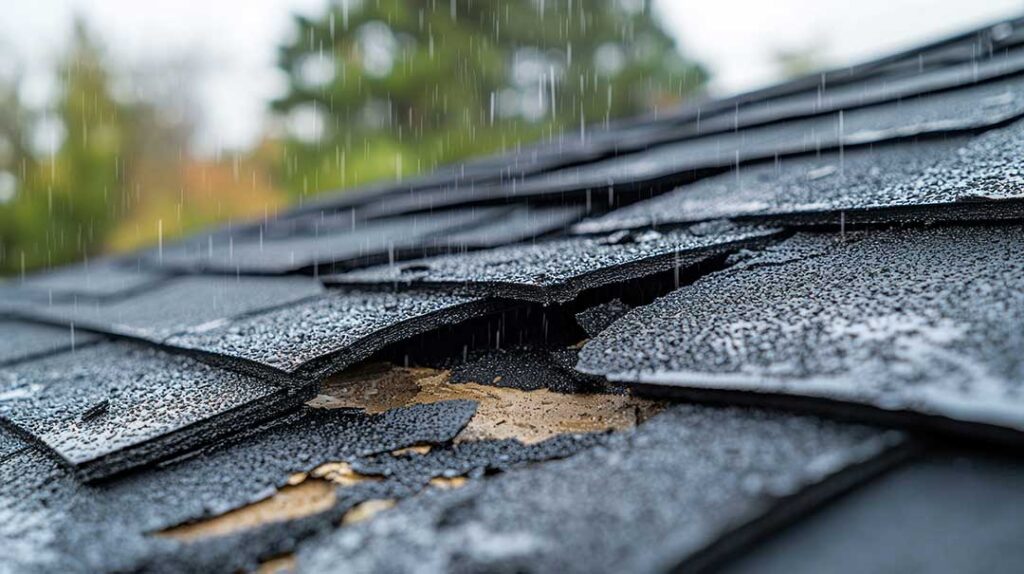
Asphalt shingles can age faster when granules are lost, shingles remain damp, or repeated ice and snow conditions stress the roof. Metal can resist many of these conditions, but it is not immune to corrosion, coating wear, loose fasteners, impact dents, or problems around chimneys and other penetrations.
A longer rated lifespan does not guarantee longer real-world performance. Roof edges, valleys, flashing, and penetrations often fail before the main field material.
How do they perform in snow and winter weather?
Both materials can perform well in snowy climates when the roof assembly is properly designed.
Metal roofing has a smooth surface, so snow may slide suddenly, especially on steeper roof sections. Snow guards may be useful above entryways, walkways, decks, or areas where falling snow could damage landscaping or create a safety concern. A metal roof should not be selected without considering where snow will discharge.
Asphalt shingles provide more friction, which can help hold snow in place. They can still be damaged by ice dams, drifting, wind-driven snow, and repeated freeze-thaw movement. Ice dam prevention depends more on insulation, air sealing, ventilation, underlayment, and roof geometry than on the visible roof covering alone.
For either system, gutters and downspouts need to be positioned and secured with winter conditions in mind. Heavy snow and ice can pull on poorly supported gutter systems.
Which option handles wind and storms better?
Metal roofing can offer strong wind resistance, but its performance depends heavily on the fastening pattern and edge details. Panels that are not properly secured may lift or allow water entry at seams. Metal can also transmit the sound of rain or hail more noticeably, although attic insulation and roof underlayment reduce that effect.
Architectural asphalt shingles are tested for wind resistance and can perform reliably when installed over a sound deck with correct nailing. Missing nails, misplaced nails, poor starter strips, and inadequate edge fastening can reduce resistance even when the shingles themselves are well made.
Neither material eliminates storm damage. Falling limbs, hail, severe wind, and debris can affect both systems.
Is metal roofing more energy efficient?
Metal roofing may reduce summer heat gain when it has a reflective finish and the roof assembly includes proper ventilation and insulation. Light-colored or specially coated products generally reflect more solar energy than dark surfaces.
Asphalt shingles can also be produced with reflective or “cool roof” characteristics. The material alone does not determine indoor comfort. Attic insulation, air sealing, ventilation, windows, and heating and cooling equipment often have a larger effect on household energy use.
In a cold-winter climate, a highly reflective roof is not automatically a major heating solution. Roof color and reflectivity should be considered alongside the whole building envelope rather than treated as a stand-alone energy upgrade.
Which roof costs less?
Asphalt shingles usually have the lower upfront cost. They are widely used, familiar to installers, and easier to replace in sections when localized damage occurs. This makes them practical for many homeowners managing a limited renovation budget.
Metal roofing often costs more at installation because of the material, trim, underlayment, flashing, and labor required. The higher initial expense may be easier to justify when a homeowner expects to remain in the house for many years and values longer replacement intervals.
A fair comparison should include more than the first invoice:
- Expected service life
- Removal and disposal of the existing roof
- Deck repairs
- Flashing replacement
- Snow guards or specialized trim
- Future maintenance
- Insurance requirements or limitations
- The cost of replacing the roof before selling the home
The least expensive roof is not always the least expensive over the entire period of ownership.
Are metal roofs noisy?
Metal roofs can sound louder during heavy rain or hail, especially over an unfinished attic or lightly insulated structure. In a completed home with insulation, roof decking, underlayment, and finished ceilings, the difference is often less noticeable than people expect.
Noise also depends on the roof design. A solidly attached panel system over a properly prepared deck may sound very different from a lightweight system installed with minimal separation from the interior ceiling.
Can metal roofing be installed over asphalt shingles?
Sometimes, but the answer depends on the existing roof, the building code, the roof deck, the manufacturer’s instructions, and the condition of the underlayment and flashing. Covering an old roof can conceal damaged decking or trapped moisture. It may also complicate future repairs.
Existing asphalt shingles should not simply be treated as a suitable base without inspection. In some cases, removal is necessary to evaluate the deck and rebuild the roof assembly correctly.
New York’s residential code addresses both asphalt shingles and metal roof coverings, along with requirements for weather protection, flashing, roof drainage, and installation. Applicable code requirements can change, so replacement work should be evaluated under the rules in effect when the project is undertaken.
Which choice makes more sense for a typical local home?
Asphalt shingles may be the practical choice when:
- The roof has a conventional design and moderate slope
- Initial cost is a major concern
- Matching the existing appearance matters
- Repairs may need to be simple and familiar
- The home may be sold within a shorter ownership period
Metal roofing may be worth considering when:
- Long service life is a priority
- The roof has a suitable slope and design
- Snow-shedding can be managed safely
- The homeowner accepts a higher initial cost
- Low maintenance and durable finishes are important
- The structure and roof deck are suitable for the selected system
The condition of the existing roof should be assessed before comparing materials. A new roof covering will not correct inadequate ventilation, damaged decking, poor drainage, or defective flashing.
For many area households, the decision ultimately comes down to a balance between upfront budget and long-term ownership. Asphalt shingles remain a sound choice when properly selected and installed. Metal roofing can provide greater longevity, but its advantages depend on a complete roof assembly and details suited to winter weather.
