
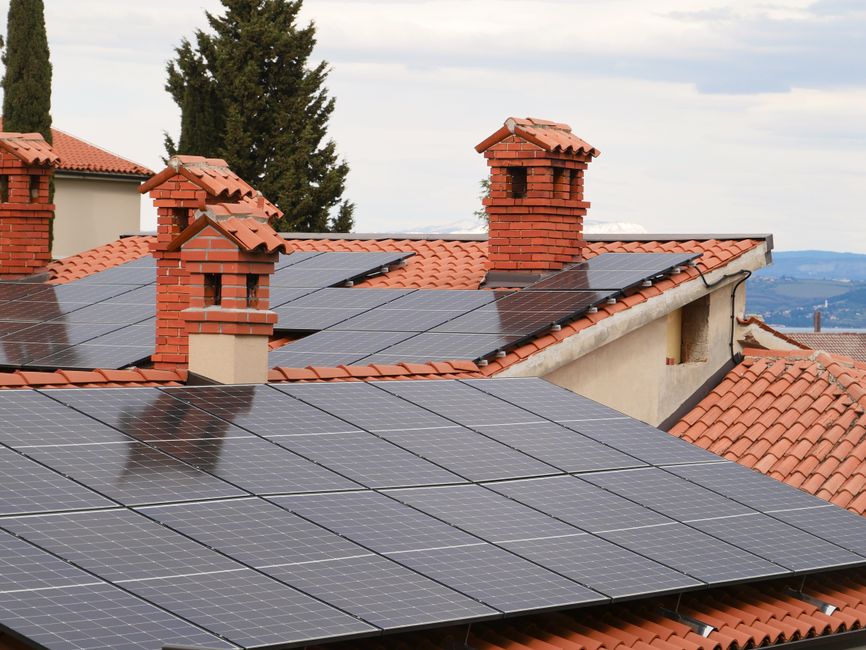
Solar panels can produce useful electricity for a home, but the roof beneath them is part of the system. Before installation, homeowners should consider roof age, structural condition, snow and ice, drainage, access, wiring, and the possibility of future repairs.
Is my roof ready for solar panels?
A roof should be in sound condition before panels are installed. Solar equipment may remain in place for 20 to 30 years, while an older asphalt-shingle roof may need replacement sooner. Installing panels on a roof near the end of its useful life can create an avoidable problem: the panels and mounting hardware may need to be removed and reinstalled during reroofing.
A roof evaluation should consider:
- The age and remaining life of the roof covering
- Soft spots, sagging, damaged decking, or visible leaks
- Shingle curling, cracking, blistering, or missing sections
- The condition of flashing around chimneys, vents, and roof edges
- Previous repairs and any remaining roof warranty
- Whether attic ventilation and insulation are functioning properly
A roof does not need to be new to support solar panels, but it should not have unresolved moisture or structural problems. If major roof work is likely within the next several years, completing that work first may be more practical.
Can a roof support the weight of solar panels?
Most conventional residential roofs can support a properly designed solar array, but the question should be verified rather than assumed. The total load includes the panels, rails, attachments, wiring, and any concentrated weight at mounting points.
Snow is another factor in Baldwinsville. Winter accumulation, drifting, freezing and thawing, and ice formation all affect the loads and weatherproofing demands on a roof. Panels can also change how snow moves across the roof, especially near lower edges, valleys, dormers, and roof transitions.
A sound design accounts for:
- The roof framing and condition of the sheathing
- Panel and mounting-system weight
- Wind uplift
- Snow loads and possible snow drifting
- The location of rafters or trusses
- The spacing and attachment of mounting points
New York’s building requirements address rooftop photovoltaic systems, structural loading, roof access, fire safety, and weather protection. Permits and inspections may be required, and the final requirements can depend on the property and the authority having jurisdiction.
Which parts of a roof are best for panels?
Solar panels perform best on roof areas with strong, relatively consistent sun exposure. Roof orientation matters, but it is not the only consideration. A roof plane with less-than-ideal orientation may still produce useful electricity if it has enough open space and limited shade.
Potential sources of shading include:
- Mature trees
- Nearby roof sections, dormers, and chimneys
- Utility equipment or rooftop structures
- Snow-covered obstructions
- Seasonal changes in the sun’s position
A roof should also have enough unobstructed area for the planned array while preserving required pathways and clearances. Panels should not block access to important roof equipment, interfere with drainage, or make future inspection unnecessarily difficult.
In this area, trees can be especially important. A roof that appears sunny in spring may receive more shade later in the year as foliage develops. Seasonal shade analysis is more useful than judging sunlight from a single visit.
Will solar panels damage the roof?
Solar panels do not inherently damage a roof when the mounting system is correctly designed and installed. Problems are more likely when roof penetrations are poorly located, flashing is inadequate, attachments are not secured to structural framing, or the installation does not account for water flow.
The most critical details include:
- Proper placement of mounting attachments
- Durable flashing around each penetration
- Sealants used only as part of a complete weatherproofing method
- Protection of shingles and other roof coverings during installation
- Adequate clearance from valleys, ridges, eaves, and roof edges
- Correct routing and support of electrical conduit
A mounting attachment is not simply a hole filled with sealant. It should be integrated with the roof assembly so water is directed away from the penetration. Poor detailing may cause leaks that do not appear until after several seasons of rain, snow, or freeze-thaw cycling.
How do snow and ice affect rooftop solar?
Snow usually does not mean solar panels are unsuitable for a home. Panels are smooth and angled, so snow may slide or melt more readily than it does on some roof surfaces. However, sliding snow can create a safety hazard over entrances, walkways, decks, or lower roofs.
Homeowners should consider:
- Whether falling or sliding snow could reach a frequently used area
- Whether snow guards or other controls are appropriate
- How ice dams could affect the roof edge
- Whether panels will complicate roof access during winter
- Whether anyone might be tempted to climb onto the roof to clear snow
Manual snow removal is generally hazardous and can damage panels, wiring, shingles, or flashing. A system should be designed with local winter conditions in mind rather than relying on emergency clearing after every storm.
Ice dams deserve separate attention. Solar panels do not automatically cause ice dams, but they can alter snow patterns and make certain roof areas harder to inspect. Attic air sealing, insulation, ventilation, and properly installed ice-barrier materials remain important parts of winter roof performance.
What happens if the roof needs repairs later?
Solar panels and their mounting hardware may need to be temporarily removed for substantial roof work. This can add time, coordination, and cost to a future reroofing project. Minor repairs may sometimes be completed without removing the array, but access can be limited.
Before installation, it is useful to document:
- The roof’s age and covering type
- The location of rafters and existing roof penetrations
- The panel layout and attachment points
- The location of wiring and equipment
- Warranty terms for both the roof and solar system
- Who is responsible for removal and reinstallation if needed
This information can be valuable years later, particularly if the original installer is no longer available or the home changes ownership.
Does solar work during a power outage?
A standard grid-connected solar system usually shuts down when the utility grid fails. This protects utility workers from electricity being sent back through power lines during an outage.
Solar panels can provide backup power only when the system includes appropriate energy storage and equipment that can safely separate the home from the grid. A battery system also has limits. Its useful duration depends on battery size, household demand, weather, and which circuits are connected.
This distinction matters during winter outages, when heating equipment, sump pumps, refrigeration, communications equipment, and lighting may be priorities.
What roof and electrical questions should be answered first?
A thorough plan should address both the roof assembly and the home’s electrical system. Important questions include:
- Is the roof structurally sound and weather-tight?
- How many years of roof life remain?
- Where will attachments be placed?
- How will penetrations and flashing be protected?
- Will the electrical panel accommodate the system?
- Where will the inverter, disconnects, and conduit be located?
- Will pathways remain available for fire access and roof maintenance?
- How will the system be monitored?
- What happens if a panel, inverter, or roof component fails?
In New York, rooftop solar installations must follow applicable electrical, building, fire, and utility-interconnection requirements. The system’s expected energy production also depends on roof orientation, shading, panel layout, household electricity use, and the way excess generation is credited.
For many households, the most sensible starting point is not the panel count. It is a careful review of whether the roof can remain dependable for the same general period as the solar equipment. A durable roof, properly managed water flow, safe winter performance, and clear future repair plans are just as important as the amount of electricity the panels may produce.
