
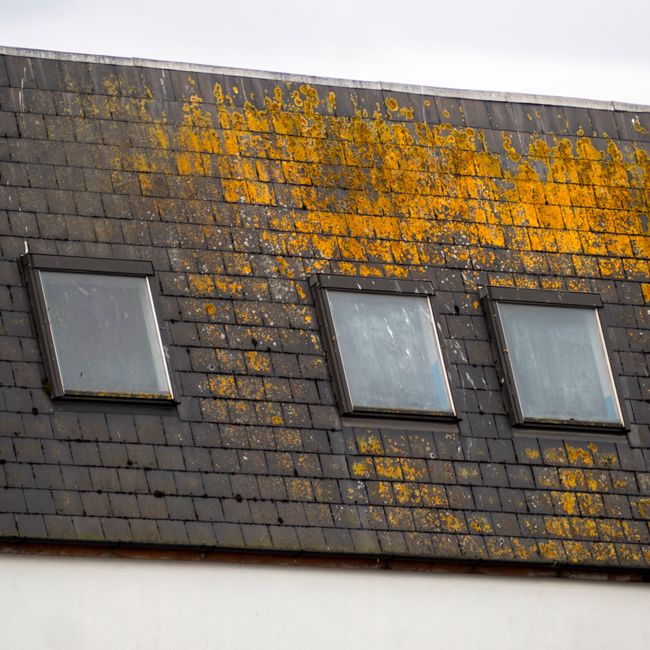
Moss and algae growth is common on roofs that stay damp, shaded, or slow to dry. In Baldwinsville, NY, seasonal moisture, snow, tree cover, and humid summer conditions can create an environment where green moss and dark algae stains develop, especially on older asphalt-shingle roofs.
Although moss and algae are not the same problem, both can affect a roof’s appearance and, over time, contribute to premature wear. The safest response depends on the type of growth, how extensive it is, and whether the roofing materials have already been damaged.
What is the difference between moss and algae?
Moss is a small plant that forms raised, soft, green patches. It commonly appears along shingle edges, in roof valleys, and beneath overhanging branches. Moss can hold moisture against the roof surface and may lift or separate shingles as it expands.
Algae usually appears as flat black, gray, brown, or green discoloration. It often spreads in streaks or broad patches. Algae stains are generally less physically damaging than moss, but they can make a roof look neglected and may indicate that parts of the roof remain damp for long periods.
Lichen, which may appear as crusty gray-green spots, is a combination of a fungus and an alga. It can attach firmly to roofing materials and may be more difficult to remove without causing surface damage.
Why do roofs in Baldwinsville develop moss and algae?
The main cause is prolonged moisture. A roof that dries quickly after rain is less likely to support growth than one that remains damp through much of the day.
Common contributing conditions include:
- Shade from mature trees or nearby structures
- Leaves, needles, and other organic debris resting on shingles
- Poor air movement across the roof
- Roof sections facing limited sunlight
- Clogged or poorly draining gutters
- Snow and ice that remain in shaded areas
- Shingles with worn or missing protective granules
- Water discharge from plumbing vents or other roof penetrations
The local cycle of freeze-thaw weather can add stress. Moisture that enters small gaps or remains beneath lifted shingles may freeze, expand, and then leave the roofing material more vulnerable when temperatures rise.
Can moss or algae damage a roof?
Moss can contribute to damage more directly than algae. Its root-like structures can work beneath shingle edges, while the plant itself retains moisture. As shingles lift, bend, or loosen, wind and water have more opportunity to reach the layers below.
Algae is usually a cosmetic concern, particularly when it creates dark streaks on otherwise serviceable shingles. However, heavy algae growth often occurs alongside other moisture problems, such as excessive shade, debris buildup, or slow drainage. Those conditions deserve attention even when the algae itself has not caused visible damage.
Signs that growth may be affecting the roof include:
- Shingles that curl, buckle, lift, or appear swollen
- Loose granules collecting in gutters or near downspouts
- Damp or stained roof decking visible from an attic
- Water marks on ceilings or upper walls
- Moss extending under multiple rows of shingles
- Repeated growth in the same area after cleaning
Growth alone does not prove that a roof needs replacement. A roof may have surface staining while remaining structurally sound, or it may have hidden moisture damage that is not obvious from the ground.
How should moss and algae be removed?
Removal should be gentle and controlled. Scraping, pressure washing, or aggressive brushing can strip protective granules from asphalt shingles and shorten their useful life.
For light surface growth, a roof-safe cleaning solution may loosen algae and moss over time. The solution should be appropriate for the specific roofing material and used according to its instructions. Runoff must also be managed carefully because cleaning chemicals can harm plants, soil, pets, painted surfaces, and nearby water features.
A basic cleaning approach generally includes:
1. Remove loose leaves and branches from the roof and gutters without dragging tools across the shingles.
2. Apply a compatible cleaning solution from the upper portion of the affected area downward.
3. Allow the solution to work rather than immediately scrubbing the surface.
4. Rinse gently if the product instructions call for rinsing.
5. Inspect the shingles after the growth has died back, since hidden lifting or damage may become easier to see.
Do not use a pressure washer on asphalt shingles. High-pressure water can remove granules, force water beneath shingle layers, and damage flashing or seals.
Walking on a roof also creates risk. Wet moss is slippery, and older shingles may break under foot traffic. A ladder, roof edge, or steep slope can become especially hazardous during wet, cold, or windy conditions.
Can household bleach be used?
Some roof-cleaning methods use diluted sodium hypochlorite solutions, but improper concentration, application, or runoff control can damage vegetation and building materials. Strong household cleaning products should not be mixed with other chemicals, especially acids or ammonia-based products.
The question is not only whether a solution kills moss or algae. It must also be safe for the roofing material, surrounding landscaping, gutters, siding, windows, and people or animals nearby. If the roof is steep, high, fragile, or heavily affected, attempting chemical cleaning without the right equipment can create more risk than benefit.
How can future growth be reduced?
The most effective prevention steps reduce shade, moisture, and debris.
Trim branches that rest on or heavily shade the roof, while keeping enough distance to avoid damaging shingles during wind. Clean gutters and downspouts so rainwater can leave the roof edge freely. Remove leaf buildup before it becomes a damp, compacted layer.
It also helps to inspect roof areas that remain shaded after rain. Persistent dampness may point to poor ventilation, drainage problems, damaged flashing, or a nearby source of water. Correcting the underlying condition is more useful than repeatedly cleaning the same patch.
Zinc or copper strips are sometimes installed near the roof ridge to release small amounts of metal during rainfall. These strips may discourage new growth below them, but they do not repair existing damage and may not solve growth caused by heavy shade or poor drainage. Installation must not compromise shingles or flashing.
What should residents avoid?
Several common methods can create avoidable damage:
- Pressure washing shingles
- Scraping moss with a shovel or stiff metal brush
- Pulling firmly on moss that is attached beneath shingle edges
- Using strong chemicals without protecting plants and surfaces
- Ignoring loose shingles revealed after cleaning
- Assuming dark staining always means the roof is failing
- Walking on a wet, steep, or visibly fragile roof
A roof inspection becomes especially sensible when moss is thick, growth is widespread, shingles are lifting, interior staining is present, or the roof is difficult to access safely. In those situations, the priority is identifying whether moisture has reached the roof structure—not simply making the surface look cleaner.
How often should a roof be checked?
A practical schedule is to look over the roof and gutters in spring and fall, plus a quick visual check after major wind, heavy rain, or extended snow and ice. Ground-level observation can reveal staining, fallen shingles, clogged gutters, and heavy debris without requiring anyone to climb onto the roof.
For households surrounded by trees, inspections may need to be more frequent. Keeping records of recurring moss or algae areas can also help identify whether a drainage or shade problem has been overlooked.
The goal is not to eliminate every trace of natural growth. It is to prevent persistent moisture from becoming a roofing problem, preserve the shingles that remain sound, and address unsafe conditions before they lead to leaks or structural deterioration.
